Three volcanoes, one island: why São Miguel looks the way it does
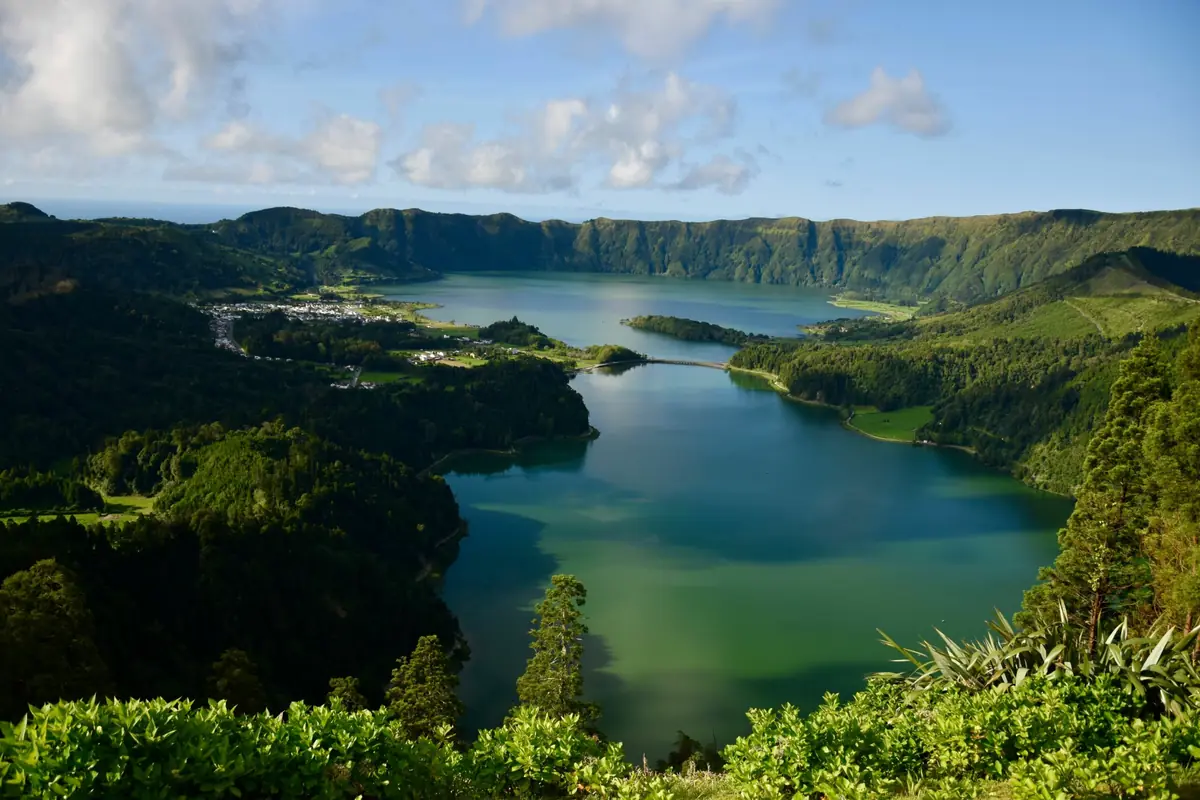
Most people travel São Miguel by ticking off a list: crater lake, viewpoint, hot spring, black beach. It gets better once you realise they are all telling the same story.
The island is a mountain top
What you’re standing on is the upper rim of an enormous mountain rising from the floor of the Atlantic — several kilometres tall. Only the tip is above water. That’s why the seabed drops away steeply just offshore, and why the beaches here are black: it’s ground-up lava.
Three big volcanoes
São Miguel isn’t really one volcano but several that grew together over time. Three of them are still considered active:
- Sete Cidades in the west — the crater holding the two famous lakes. Standing up at the Miradouro da Boca do Inferno, you’re looking into a bowl several kilometres across.
- Fogo in the middle of the island — home to Lagoa do Fogo, the quieter of the two great crater lakes.
- Furnas in the east — the volcano you can smell: the ground bubbles there, and people still cook in the hot earth to this day.
Between them lies a zone of smaller cones and fissures that you drive straight over on the way from Ponta Delgada to us, without noticing a thing.
And today?
The last eruptions on land were around 400 years ago. That doesn’t mean things are quiet underground: it’s precisely where the hot springs you bathe in come from, and the warm water that flows into the sea at Ferraria. Sitting there, you’re essentially sitting in the runoff of a sleeping volcano — and it feels wonderful.
From the garden, incidentally, you can see both at once: the Atlantic in front of you, the crater rim of Sete Cidades at your back.
Here you can see when the house is free.
Frank, Bärbel, Maren & Simon