Why the island is so green — and which plant is a problem here
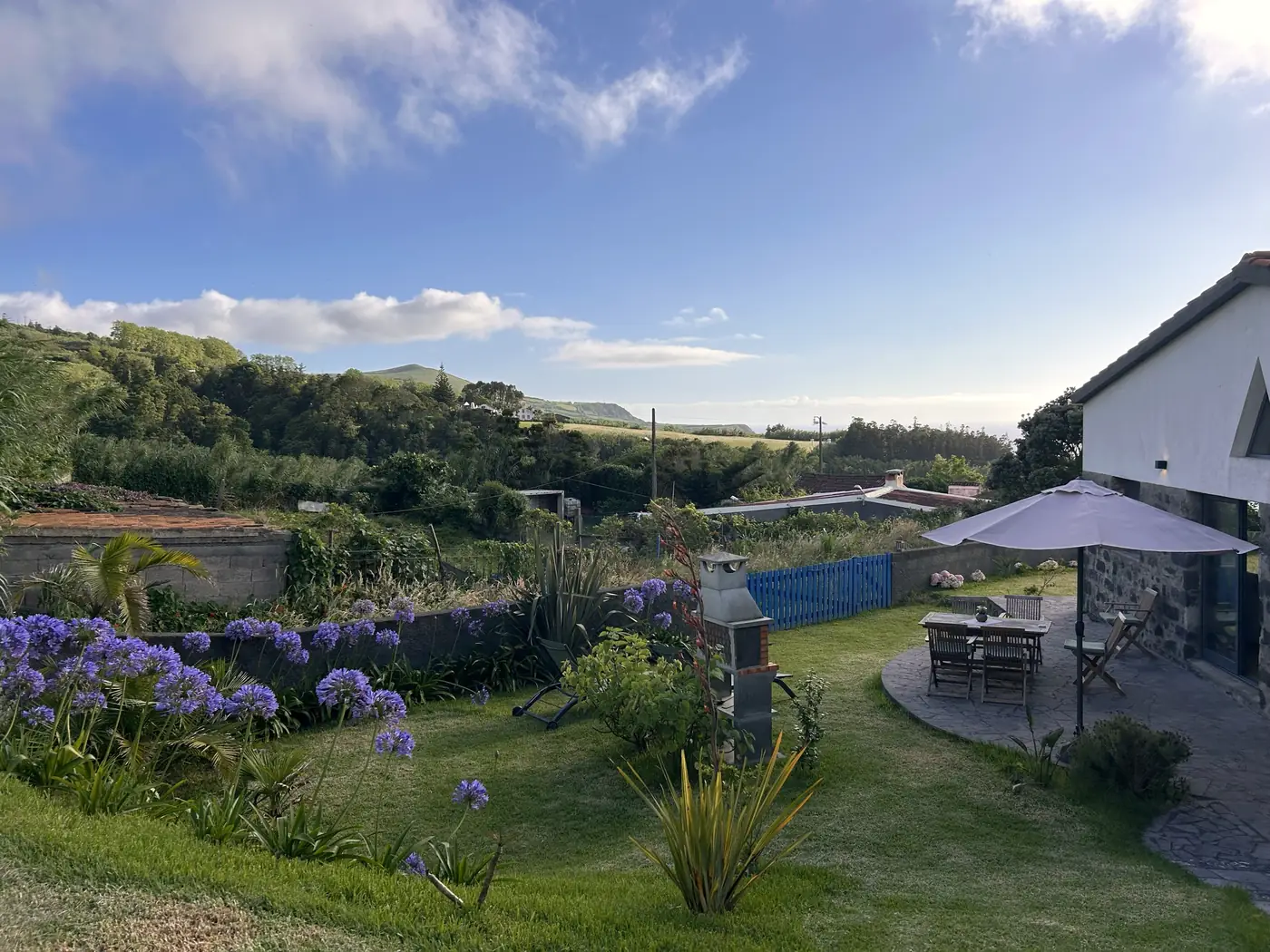
The first thing guests notice is the green. Not one green but twenty different ones, layered all the way up to the crater rim. It comes down to a simple combination: a lot of rain, mild temperatures, never any frost. Whatever lands in the ground here grows.
The second observation usually comes later: most of it isn’t native at all.
The flowers everybody photographs
- Hydrangeas. The blue hedges along the roadsides are the emblem of the Azores — and still an introduction. The reason they flower deep blue here rather than pink is the acidic, aluminium-rich volcanic soil. They bloom roughly from June to September; by October they’re over.
- Agapanthus. The blue globes on tall stems along our garden wall originally come from South Africa. They too flower in high summer.
- Ginger lily, conteira in Portuguese. Yellow-orange, strongly scented, on every bank and verge. It looks lovely — and it is the island’s biggest plant problem.
Why the ginger lily is a problem
The conteira arrived from the Himalayas in the 19th century as an ornamental. It forms dense mats of rhizomes that nothing else can come up through, and in doing so it displaces exactly the forest that belongs here: the laurel forest, the original vegetation of the Azores.
Little of that forest is left on São Miguel, mostly at altitude in the east around Pico da Vara. That’s where the priolo, the Azores bullfinch, lives — one of the rarest birds in Europe. Twenty-odd years ago it was almost gone. It still exists thanks to a long-running conservation project consisting essentially of one task: pulling out ginger lily and planting native species back.
So if you see people with mattocks in the undergrowth, that’s why.
And the dark blocks on the hillsides?
Those are cryptomerias, Japanese cedars, planted in rows. They’re the island’s timber and shape the landscape nearly as much as the hydrangeas do. Between them are stands of tall maize — not food, but fodder for the cattle.
What you’ll see in October
The hydrangeas are finished and so are the agapanthus. The ginger lily is still glowing, though, the pastures are as green after the first autumn rain as they are in spring, and passion fruit hangs in the gardens. It isn’t the postcard version of the island — but honestly, it’s the more pleasant one.
Here you can see when the house is free.
Frank, Bärbel, Maren & Simon