The Azores in ten minutes: a very short history of the island
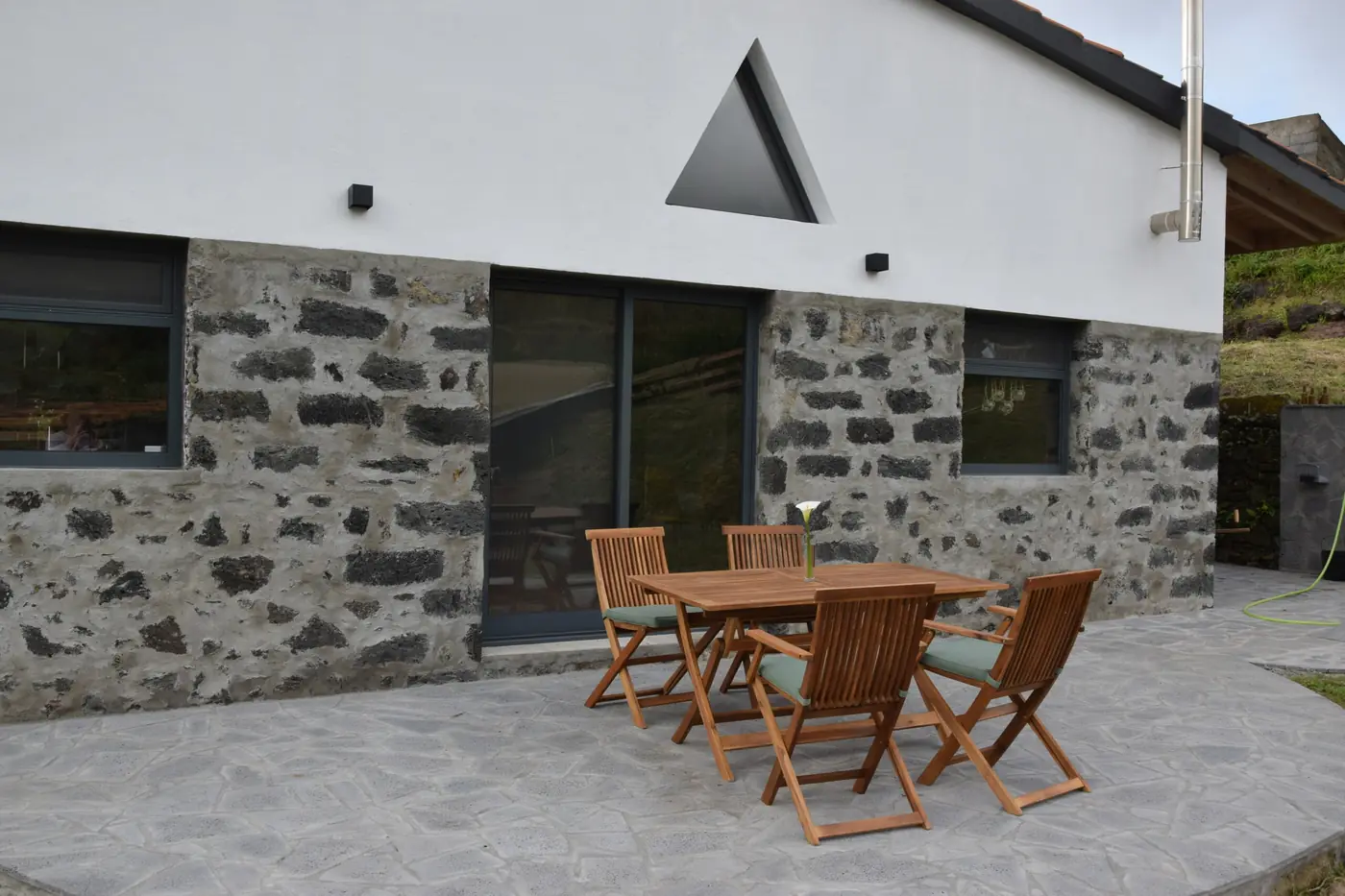
Most islands have an indigenous population. The Azores don’t. When Portuguese navigators reached them in the middle of the 15th century there was nobody here — no people, no trace, just forest, birds and volcanic rock. Everything you see on São Miguel has happened since. That isn’t a thousand years; it’s barely six hundred.
The first settlers
They came from mainland Portugal — the Alentejo, the Algarve, the Minho — and from Flanders. Flemish families settled mainly on the central islands; on some of them you can still hear it in the surnames. They brought wheat, livestock and what they needed to build. The building material was lying around anyway: black basalt, roughly dressed, pointed with lime and rendered white. Our house is built exactly that way, and that’s not a stylistic quotation but simply how people have built here for centuries.
How the island earned its living
With a succession of very different things:
- Wheat for the mother country.
- Woad, a plant yielding blue dye — the first great export.
- Oranges. In the 19th century entire shiploads went to England. The wealth of those decades is still standing in Ponta Delgada: the grand houses, the gardens, the churches. Then a disease took the trees and the trade collapsed.
- Pineapple, tea and tobacco as replacements. The pineapple greenhouses and the tea plantations are still there.
- Milk and beef, which shape the landscape to this day — the cows you meet on the roads are not a folklore programme.
Whaling
Lookouts watched for whales from the cliffs, and when one was sighted, open boats rowed out. American whaling ships signed on Azoreans for generations — one of the reasons so many families have relatives in New England. Whaling was banned in the 1980s. The lookout huts of that era now direct boats to the whales, except that today they’re photographed rather than harpooned.
Earthquakes, emigration, autonomy
This is not a quiet place. In 1522 a landslide buried Vila Franca do Campo, then the main town — after which Ponta Delgada grew. Again and again, quakes and eruptions have made people leave; the Capelinhos eruption on Faial in the late 1950s set off a great wave of emigration to the United States. To this day more Azoreans live outside the Azores than on them.
Since 1976 the Azores have been an autonomous region of Portugal with their own government and parliament — spread across three islands so that none feels short-changed.
And what does that mean for your holiday?
Little and a lot. Little, because you need none of it to enjoy a day at the crater lake. A lot, because it suddenly makes sense why the village church is so large, why the walls are black stone, and why the neighbour greets you in English with an American accent.
Here you can see when the house is free.
Frank, Bärbel, Maren & Simon